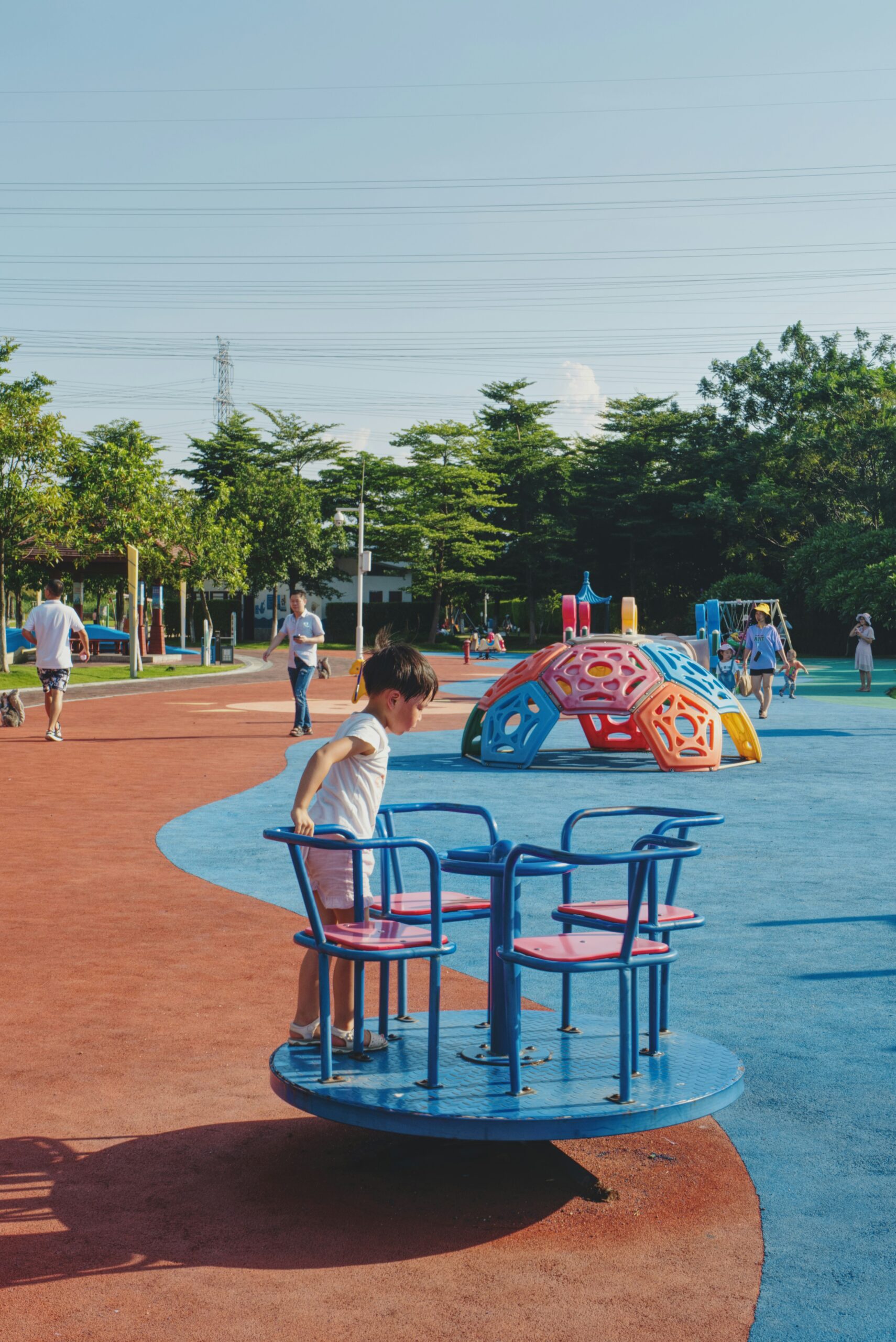
Inclusive playgrounds are specially designed with the understanding that visitors come with different ages and abilities. Inclusion and accessibility is about much more than just compliance with federal or state laws. Playgrounds are an opportunity for children and adults to engage in physical activity, stimulate their senses, develop relationships and social skills, build self-esteem, and improve cognitive development. A survey conducted in Denmark, states that 57% of wheelchair using children never or rarely visit a public playground.[1] Wheelchair users generally have access to less than one-half of the playground equipment their non-disabled peers can use. 86% of wheelchair bound visitors report they cannot use the equipment at their local playground.
Inclusive playgrounds are designed to combat and reduce these statistics. They incorporate accessible surfaces (usually a solid rubberized or turf surface) to allow wheelchairs, walkers, and other assistive devices access to play equipment. They incorporate play equipment that initiates play activities at ground level and allows visitors to play from the ground level up. They incorporate different types of activities focusing on the core areas of play including jumping, climbing, balance, swinging, sliding. Inclusive playgrounds permit stimulation of multiple senses while having simple design. They are safe while accommodating diverse needs. They permit for intergenerational play and also encourage and foster the social aspects of play between able-bodied children and those with disabilities.
[1] Equality in Play, Kompan Play Institute.